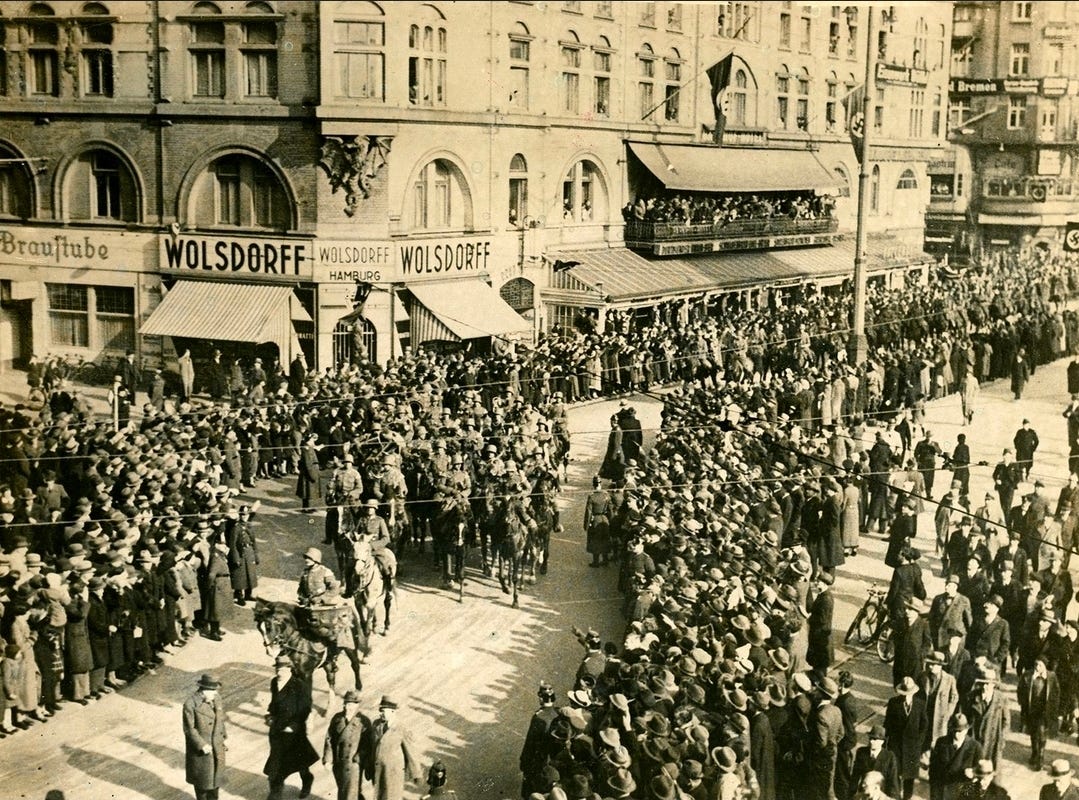
1936, Hitler’s Army Marched Into the Rhineland
They were told to retreat if the people pushed back, but no one did.

That silence helped start WWII.
When Hitler sent German troops into the Rhineland, a region demilitarized by the Treaty of Versailles, it was a blatant violation of international law. The troops had orders to retreat if they met any resistance. Later on, Hitler will confess he would’ve pulled them out if the French army had responded.
But no one did.
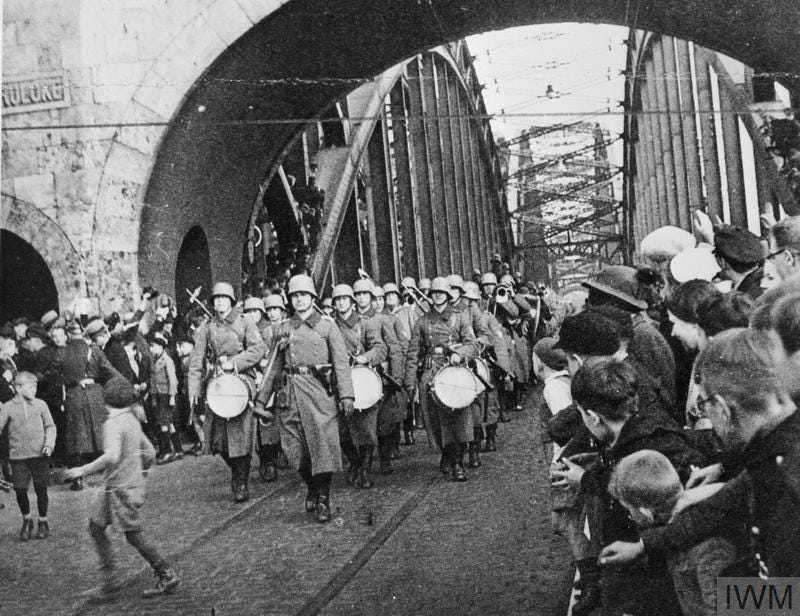
France, Britain, the League of Nations. They all watched it happen and chose not to act. They thought maybe it wasn’t worth the trouble. Maybe they could wait. Maybe it would stop there.
It didn’t.
That single moment of nonresistance taught Hitler everything he needed to know. If he moved fast, loud, and shamelessly, the world would hesitate. Treaties could be ignored. Fear would keep the powerful from acting.
History is whispering warnings.
Authoritarianism doesn’t start with war. It starts with tests. It starts with a push into places no one thinks are worth defending. And when there’s no pushback, it moves again.
This isn’t just history. It’s a lesson: the danger isn’t only in the tyrant. It's in the silence around him.