

The Places ICE Doesn’t Need to Raid
How 287(g) turns local police into immigration enforcement

2026 opened with renewed ICE raids, public detentions, and mass protests across U.S. cities. Governors and mayors in multiple states have reiterated that they will not enforce federal immigration law using state or local resources.
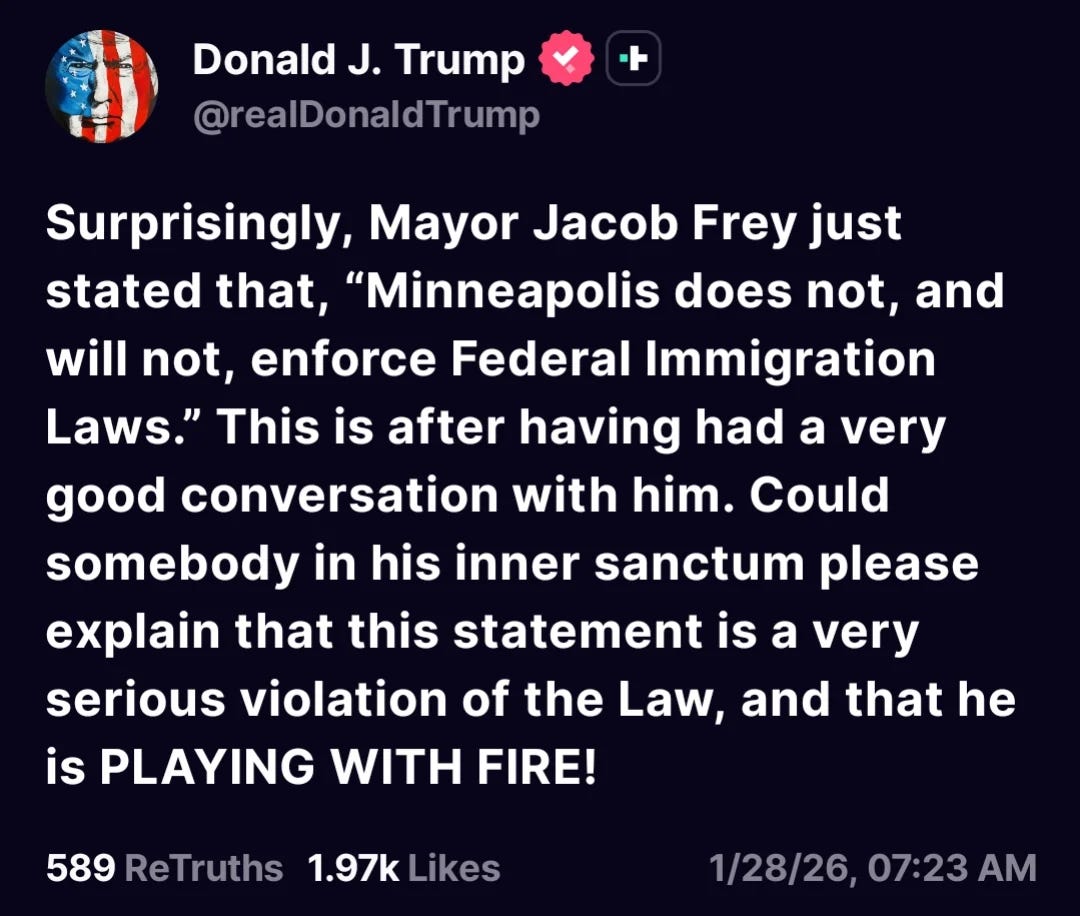
Trump (45) responded online, claiming that cities that refuse to cooperate are acting unlawfully.
They are not.
What the Law Actually Says
In Printz v. United States (1997), the Supreme Court ruled that the federal government cannot compel state or local officials to enforce federal law. Writing for the Court, Justice Antonin Scalia stated that the federal government:
“may neither issue directives requiring the States to address particular problems, nor command the States' officers … to administer or enforce a federal regulatory program.”
This principle is known as anti-commandeering. It is settled law.
State and local governments are not obligated to assist federal agents. That includes arresting, detaining, or holding individuals on behalf of ICE.
Minneapolis Mayor Jacob Frey publicly reaffirmed this position, stating that the city “does not and will not enforce federal immigration laws” and will not use local police for immigration enforcement. He later confirmed that he communicated this position directly to Trump.
There is no constitutional or statutory precedent requiring cities to do otherwise.
The City of Minneapolis is now suing the federal government, alleging violations of constitutional and civil rights tied to recent enforcement actions.
Let’s Talk About the ICE 287(g) Program.
If you visit ICE’s official website, you’ll find a page inviting state and local law enforcement agencies to enroll in the 287(g) program.
287(g) comes from Section 287(g) of the Immigration and Nationality Act. In plain terms, it allows the federal government to delegate immigration enforcement authority to local and state law enforcement.
Under these agreements, local officers are trained and authorized to:
question individuals about immigration status
issue immigration detainers
initiate removal processes
ICE retains formal oversight, but local agencies handle day-to-day enforcement.
The Three Models
Jail Enforcement Model (JEM)
Allows officers to screen individuals after arrest, inside jails, or before release to determine immigration status.
Task Force Model (TFM)
Allows officers to question individuals in the field during traffic stops, street encounters, or joint operations.
Warrant Service Officer Model (WSO)
Allows local officers to serve administrative immigration warrants.
Each model expands federal enforcement capacity by embedding it inside local policing.
Structural Risks
Critics have consistently raised the same concerns:
Local law enforcement becomes an immigration gatekeeper.
Community trust erodes.
Victims and witnesses avoid reporting crimes.
Immigration violations are civil matters. 287(g) embeds them inside criminal policing, collapsing the distinction in practice.
How Big Is the Program
As of January 28, 2026 (7:08 a.m.), ICE has signed 1,373 Memorandums of Agreement covering 40 states.
That includes:
151 Jail Enforcement agreements across 32 states
457 Warrant Service Officer agreements across 35 states
765 Task Force agreements across 35 states
So, Why Do Raids Look Concentrated in Certain Cities?
ICE activity has been evident in cities like Minneapolis, Chicago, and Washington, D.C. This has led to circulating claims that enforcement is not really about immigration, but about targeting Democratic cities, intimidating mayors, or provoking unrest.
Some of those claims may overlap with political reality. But there is a more basic explanation.
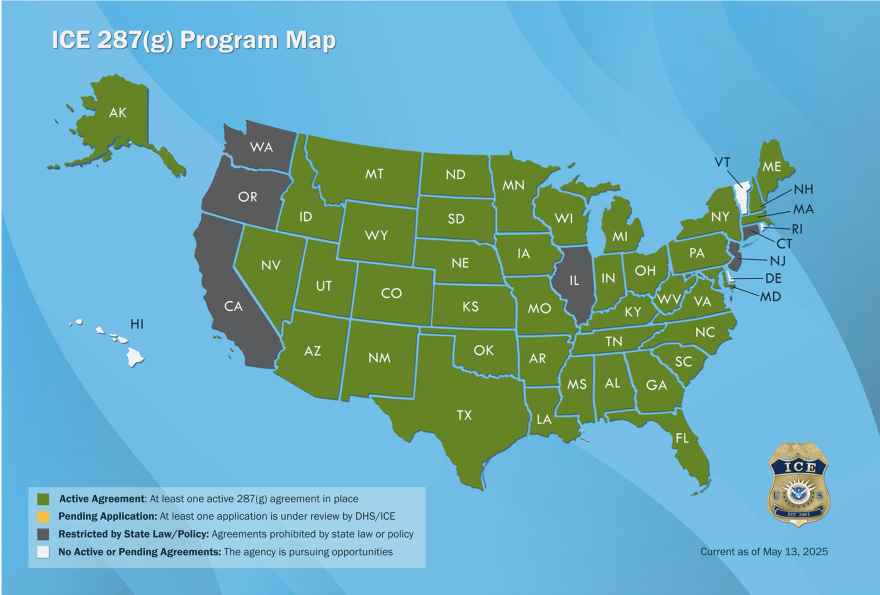
Look at where 287(g) is embedded.
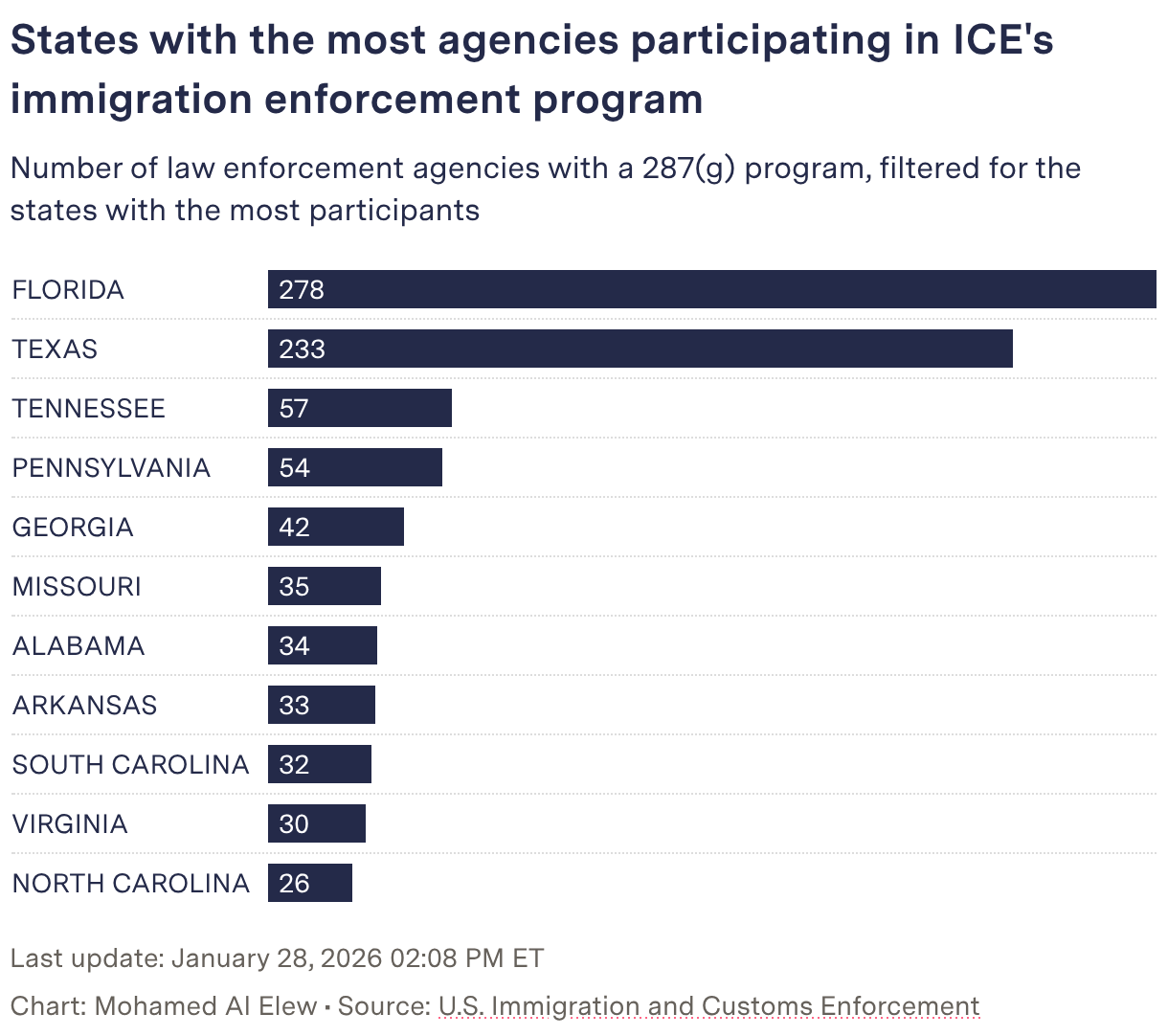
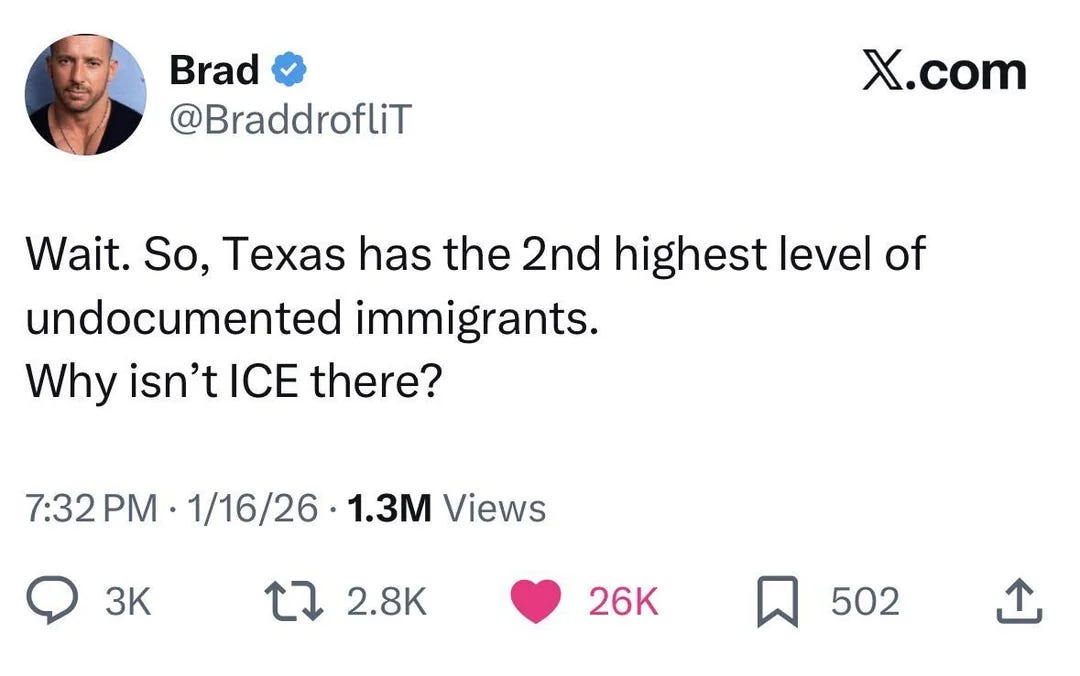
States like Texas and Florida show extensive participation by local and county agencies. In these states, immigration enforcement is delegated mainly to local authorities. ICE does not need to stage visible operations because enforcement already happens through sheriffs, jails, and traffic stops.
You can see a full county-level breakdown here:
Here’s Every Local Police Agency Enforcing for ICE.
287(g) Legislative Landscape by State
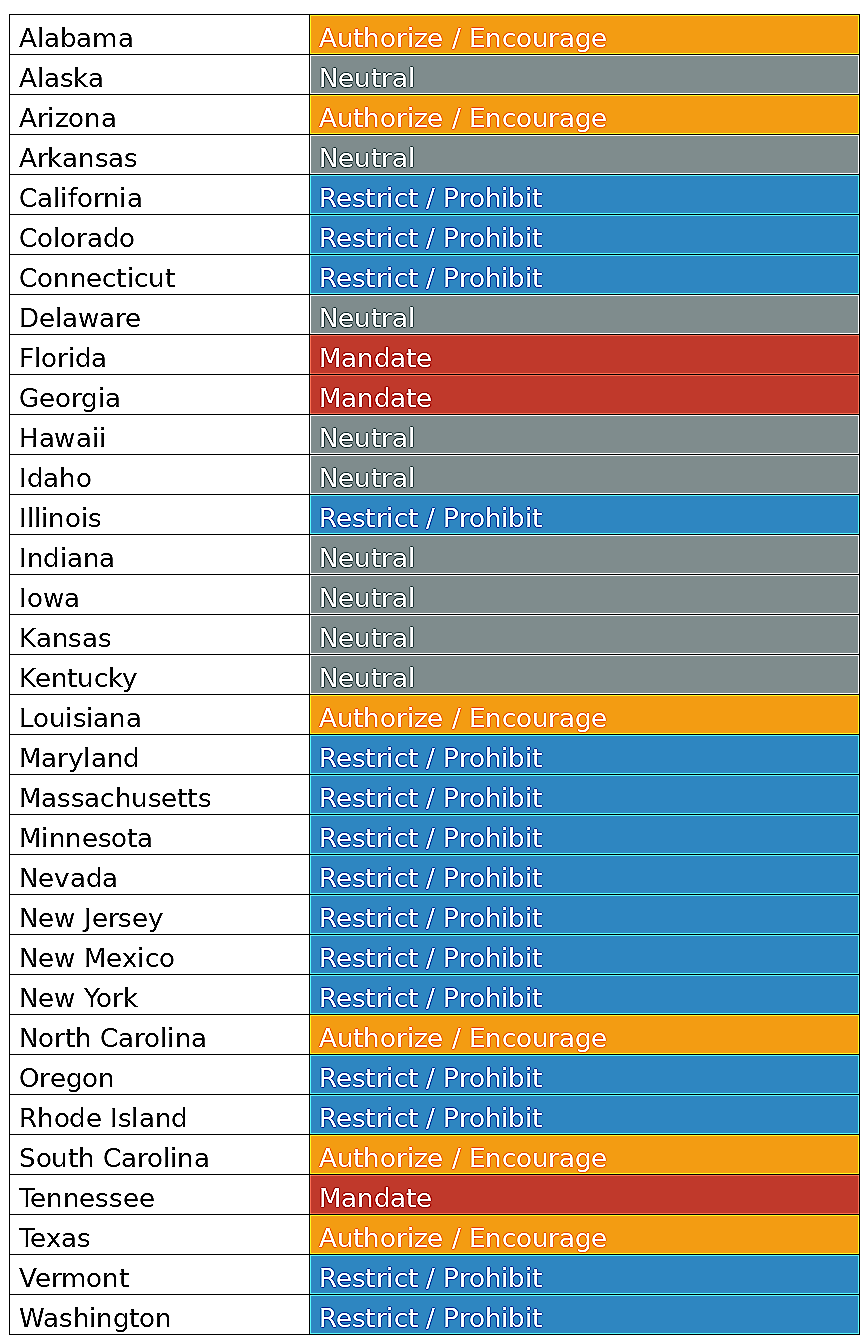
Mandate
State law requires or effectively compels ICE cooperation that includes 287(g).
Authorize / Encourage
State law permits, protects, or incentivizes participation.
Restrict / Prohibit
State law limits or bars participation.
Neutral
No specific statute. Participation remains a local choice.
What This Means
Texas, Georgia, and Florida do not need headline-grabbing ICE raids. Their systems already route people into immigration enforcement quietly.
Cities like Minneapolis look different because the state has not mandated cooperation. When local governments refuse delegation, ICE must operate visibly, directly, and federally.
That visibility is not accidental. It is the friction point where federal power meets refusal.
We are not seeing “more ICE” in some cities.
We are seeing where delegation failed.
And that is the distinction that matters.