


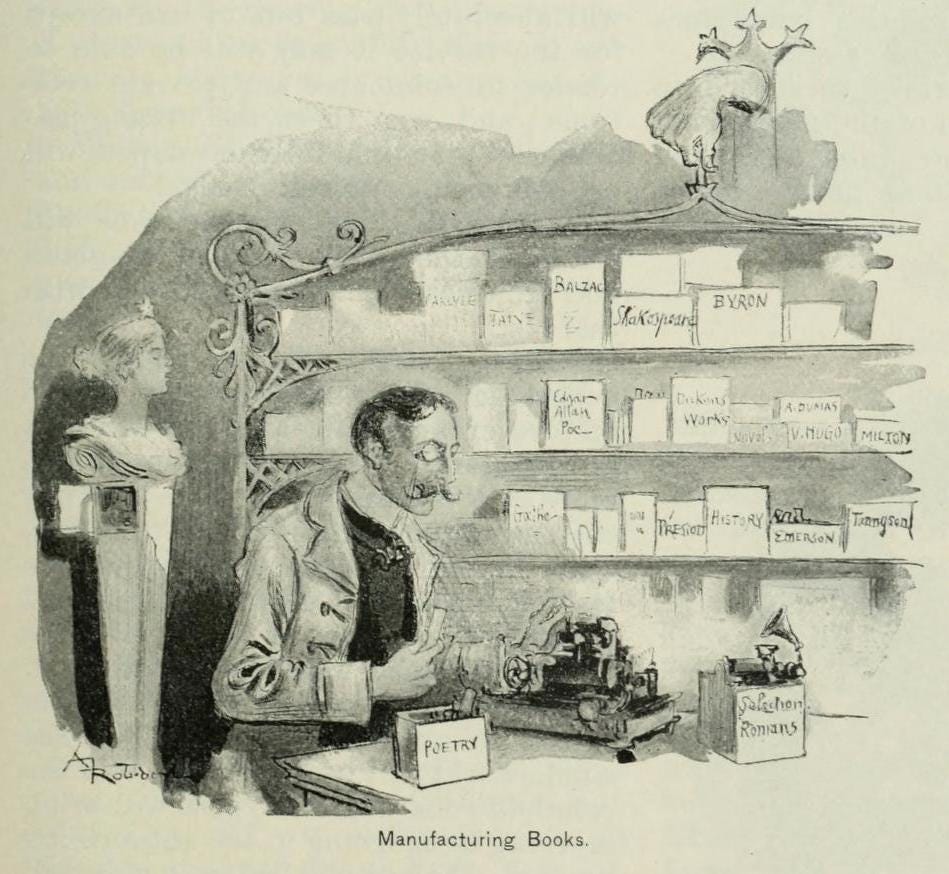
The greatest weapon isn’t the tank or the prison. It’s the story. Whoever controls the narrative doesn’t just dictate how events are remembered. They dictate what becomes possible. If enough people believe a version of reality, then it might as well be true.
That’s why every authoritarian fights for the frame.
The Illusion of Power
Power is often more illusion than force. The tyrant’s grip looks unbreakable until it isn’t. The army on parade, the slogans on billboards, the endless speeches… these are masks designed to make resistance look futile.
History proves how fragile that mask really is.
After World War II and the fall of the Nazis, Germany was divided between the Allied powers. The United States, Britain, and France took control of the western sectors, while the Soviet Union occupied the east. Berlin, though deep inside Soviet-controlled East Germany, was itself split the same way: half democratic West, half communist East. The Wall went up in 1961 to stop East Germans from fleeing to the West, and for decades it symbolized permanence. The regime in East Berlin looked solid, its tanks and secret police feared. It collapsed, not from superior firepower, but because enough people stopped believing the system could hold. The illusion shattered, and in 1989 the wall came down without a shot fired.
The Shah of Iran (1979):
After World War II, Iran became a Cold War chess piece. In 1953, the CIA and British intelligence overthrew Prime Minister Mohammad Mossadegh after he moved to nationalize Iran’s oil. The coup reinstalled the Shah, Mohammad Reza Pahlavi, who ruled with U.S. backing, oil money, and a feared secret police (SAVAK). To many, his regime looked untouchable: wealthy, armed, modernizing, and tightly aligned with Washington.But beneath the surface, resentment built. Religious leaders opposed his secularization, workers and students despised his repression, and ordinary Iranians saw modernization enriching elites while leaving them behind. By 1978, mass protests filled the streets. When the illusion of permanence cracked, the Shah’s army (once seen as unbreakable) fractured. Soldiers refused to fire on crowds, loyalty evaporated, and within months he fled into exile. In 1979, Ayatollah Khomeini returned from exile, and the monarchy that looked indestructible collapsed almost overnight.
The Soviet Union (1991):
After World War II, the USSR emerged as a superpower, stretching from Eastern Europe to the Pacific. It commanded the second-largest military in the world, controlled nuclear arsenals, and projected ideological certainty through propaganda, parades, and censorship. For decades, it looked immovable. The Communist Party insisted history itself was on its side and that the Soviet system was inevitable and permanent.
By the late 1980s however, the cracks widened. Economic stagnation left grocery shelves bare. The costly war in Afghanistan drained morale and resources. Nationalist movements surged in the Baltic states, Ukraine, and the Caucasus. When Mikhail Gorbachev tried to reform through glasnost (openness) and perestroika (restructuring), the effect was not renewal but exposure: citizens saw the failures laid bare.The illusion broke quickly. Once republics began declaring independence, the “union” could no longer pretend to be unified. In August 1991, a failed coup by hardliners only accelerated collapse. By December, the red flag came down over the Kremlin. What had looked like the world’s second superpower evaporated in a matter of months… not by invasion, but by people and nations refusing to believe the system could hold together.
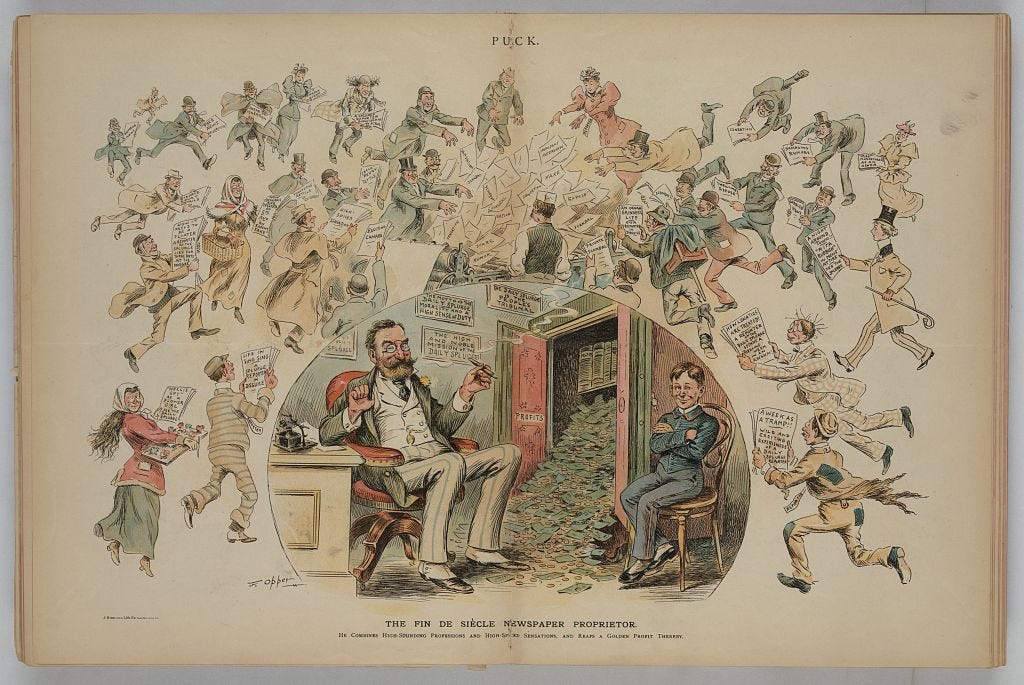
BUT the other side of the ledger matters too:
Nazi Germany (1930s–40s):
After the chaos of World War I and the humiliation of the Treaty of Versailles, Germany was shattered economically and politically. Into that vacuum stepped Adolf Hitler, whose propaganda machine promised not just recovery but destiny. Through rallies, uniforms, symbols, and slogans, the Nazis manufactured an aura of inevitability: a thousand-year Reich that would reshape the world.The illusion worked. Ordinary Germans were pulled in by fear, pride, and repetition. Military parades projected unstoppable might. Propaganda films and posters saturated daily life, casting Hitler as both savior and conqueror. Dissenters were silenced by violence or terror; concentration camps stood as proof that resistance would be crushed. For years, even as Germany was stretched thin by war, the illusion of invincibility held.
By 1943, when the tide had clearly turned against them at Stalingrad and in North Africa, the narrative still demanded belief. Germans were told victory was certain, even as cities burned under Allied bombing and food ran short. The illusion did not collapse quickly. It carried millions deeper into destruction, prolonging the war and multiplying the death toll.
Nazi Germany shows the darker side of narrative control: illusions don’t just delay collapse, they can bind people to the machinery of tyranny until the very end. It took total military defeat in 1945 to shatter the mask and expose the ruin beneath.
North Korea (Today):
No regime embodies the power of illusion more than North Korea. Born from the wreckage of the Korean War in the 1950s, the Kim dynasty built its legitimacy not on prosperity but on narrative. State propaganda paints the Kims as semi-divine figures (saviors chosen by history) while isolation shields citizens from outside comparisons.The illusion is woven into every corner of life: portraits of the leaders in every home, mass rallies choreographed into perfect unity, military parades with missiles rolling past while citizens cheer on cue. Billboards, radio, and schoolbooks reinforce a single truth: the regime is permanent, its survival inevitable. The reality (famine, black markets, brutal repression) is masked by spectacle and fear.
Unlike East Germany or the Soviet Union, the illusion hasn’t collapsed because the costs of disbelief are extreme. To reject the narrative is not just to dissent but to risk prison camps, starvation, or execution. Control of the past, present, and future is enforced not only by propaganda but by terror. As long as belief outweighs the risks of refusal, the mask holds.
North Korea proves that illusions can endure. They are fragile in theory but durable in practice when violence props them up. The lesson isn’t just that illusions break. It’s that some masks can last generations if the machinery of fear is strong enough to bind people to them.
The lesson is not that illusions always break, but that they are only as strong as the faith they command. Once enough people see through them, collapse comes with stunning speed. When belief in inevitability dissolves, even the heaviest mask slips. But illusions backed by terror can endure, binding people in place for generations.
Winners and History
“Winners write history.” It’s partly true. Winners write the official record, the textbooks, the monuments. But counter-histories survive in oral memory, underground archives, and resistant communities. The fight is never over who writes all history, but who dominates the official version. That’s why authoritarians burn books, censor curricula, and replace teachers. They understand the real battle is about shaping memory.
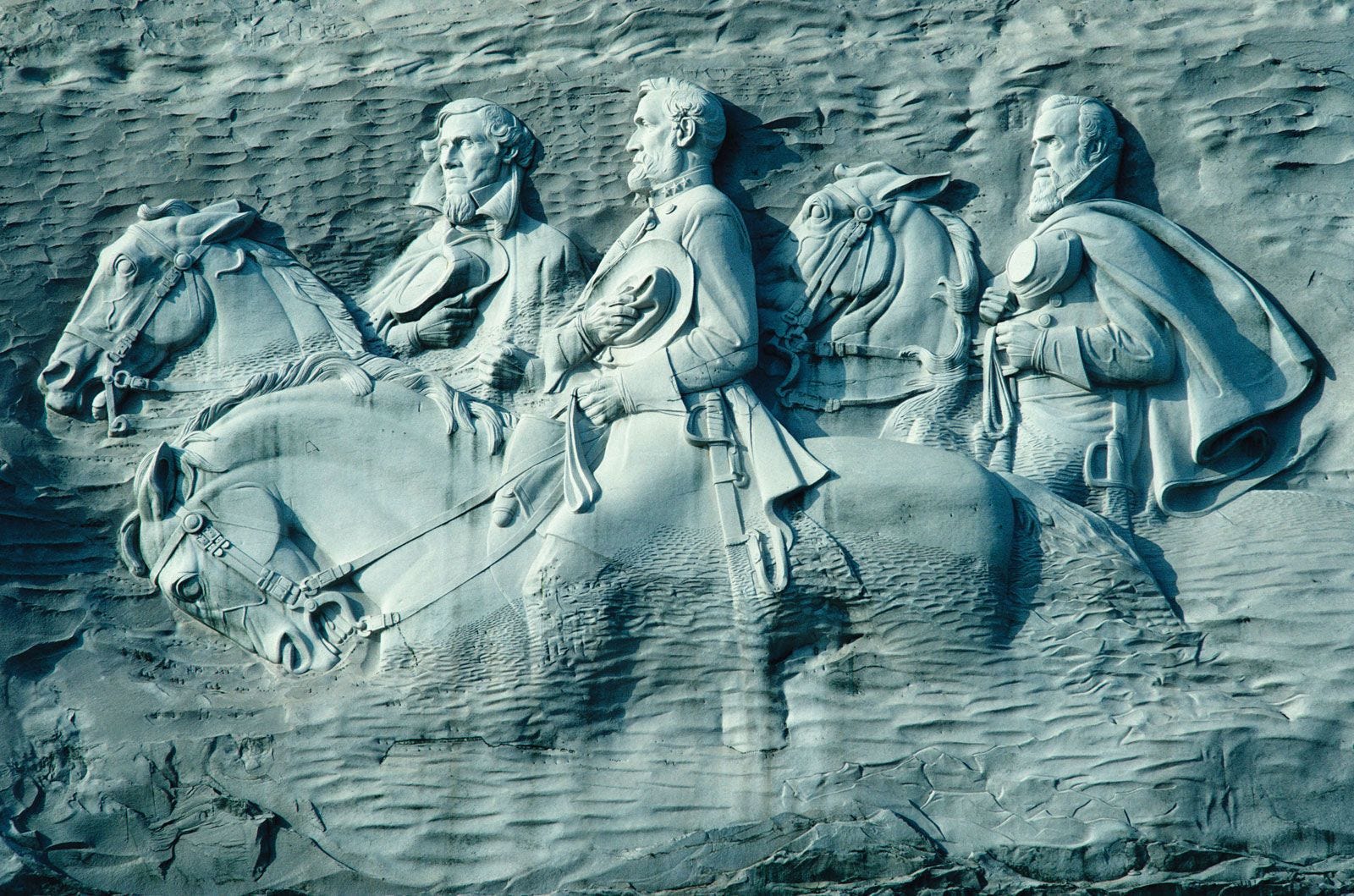
After the U.S. Civil War:
The Union won, but the South fought to rewrite the memory. The “Lost Cause” narrative painted the Confederacy as noble, slavery as a side issue, and Reconstruction as corruption. Through monuments, schoolbooks, and films like Birth of a Nation, the losers bent the record until their version dominated southern classrooms for generations. Official history said “states’ rights.” Counter-histories (Black oral traditions, abolitionist writings, and the later civil rights movement) kept the truth alive until it clawed its way back into the mainstream.
World War II:
The Allies wrote the official narrative: the defeat of fascism, the triumph of democracy. But even within that, history was selectively told. The Soviet Union’s role in smashing the Wehrmacht was minimized in the West after 1945, as the Cold War recast yesterday’s allies into today’s enemies. In the USSR itself, history was rewritten to elevate Stalin, airbrush rivals from photographs, and turn wartime sacrifice into proof of his genius. Yet diaries, underground samizdat writings, and family memories carried versions that survived the censorship.
Colonialism:
For centuries, European empires wrote their conquests as “civilizing missions.” Textbooks in London, Paris, and Brussels spoke of bringing railways, Christianity, and modernity. The massacres, famines, and theft were erased or justified. But in colonized nations, oral histories, poetry, and later independence movements kept alive the counter-narrative: that empire was plunder. When decolonization came in the mid-20th century, those suppressed voices finally pushed into official memory.
Book burning and curriculum control:
From the Nazis’ bonfires of “degenerate” literature in 1933 to Mao’s Cultural Revolution purges of teachers and scholars, authoritarians understood that to control the future, you must erase the past. The erasures were never total (Jewish writers rescued works in hiding, Chinese families memorized banned texts) but the official version dominated for decades.
The lesson is clear:
Winners may shape the monuments, but the defeated and oppressed still carve memory into whatever space remains (through whispers, songs, stories, hidden archives) and sometimes, those counter-histories outlast the official ones.
TOW
History is never single.
It’s a contested space,
fought over in classrooms
as much as in trenches.
ETHER
The victors build statues; the survivors bury stories.
Time decides which one stands when the stone cracks.
Doomed to Repeat?
“Those who cannot remember the past are condemned to repeat it”
Santayana’s line is quoted so often it feels like a cliché. But the sharper truth is this: those who distort history don’t just forget it, they engineer its return. When memory is manipulated, the same cycles replay, not by accident, but by design.
Germany after World War I:
The Treaty of Versailles ended the war but planted bitterness. Instead of reckoning honestly with Germany’s defeat, nationalist leaders spread the “stab-in-the-back” myth: that Germany had been betrayed by Jews, Marxists, and politicians rather than beaten on the battlefield. That distortion became fuel for Hitler’s rise. The refusal to remember the real reasons for defeat ensured its repetition: tyranny reborn, deadlier the second time.
The American South after Reconstruction:
When Reconstruction collapsed in the 1870s, the opportunity to build a multiracial democracy was buried under distorted history. The myth of “Black misrule” and corruption justified Jim Crow laws, lynching campaigns, and voter suppression. By rewriting Reconstruction as a failure instead of a promise betrayed, white supremacists reinstalled tyranny for vnearly a century. Only when civil rights activists forced the counter-history back into view did the cycle start to break.
Post-Soviet Russia:
After 1991, Russia never fully confronted Stalin’s crimes. Archives briefly opened, but soon memory was sanitized. Schoolbooks began portraying Stalin not as a tyrant but as a “strong leader” who modernized the country. By refusing to learn from the terror, the stage was set for Putin’s authoritarianism. Tyranny returns when memory is rewritten into nostalgia.
China and Tiananmen Square (1989):
The massacre of protesters in Beijing has been scrubbed from official history. Textbooks omit it, internet searches erase it, public mention is dangerous. By erasing the memory of resistance, the state ensures the same tactics of repression can be used again. Silence is not just forgetting. It’s preparation.
The lesson isn’t just “learn history or repeat it.” It’s: watch who controls the version you’re allowed to learn. When tyrants distort the past, they’re laying out the blueprint for their future.
TOW
Forgetting is dangerous, But false remembering is fatal.
ETHER
They bury the warning under marble and myth,
then hand you the same chain as if it were new.
Why the Past Matters for Resistance
Tyranny is never original. It recycles. Scapegoats, propaganda, manufactured crises, captured courts… the script repeats. The difference is whether people remember the last performance. When memory survives uncorrupted, it arms the next resistance.
The Spanish Civil War (1936–39):
Defeat was brutal: Franco’s fascists ruled for decades. But veterans and survivors carried the memory of their fight into exile. When fascism rose across Europe, those same exiles fought in the French Resistance and told the world what fascism really meant. Memory of Spain gave them a blueprint for resisting occupation, an early warning the rest of Europe had ignored.
The Warsaw Ghetto (1943):
Most uprisings in Nazi-occupied Europe were crushed. But the Warsaw Ghetto Uprising, though doomed militarily, became a story that outlived the occupiers. Survivors carried that memory forward. When later generations faced dictatorship in Poland, they drew strength from knowing resistance was possible even in impossible conditions. History didn’t just warn them. It armed them.
South Africa and Apartheid:
The apartheid regime tried to erase the memory of Black resistance: banning books, jailing leaders, silencing history. But communities preserved memory underground: freedom songs, oral traditions, and hidden archives kept the story alive. By the 1980s, that memory sustained boycotts, uprisings, and international solidarity. When the regime finally collapsed, it was because memory had kept the fight alive long enough for pressure to break the system.
Chile under Pinochet (1973–90):
The dictatorship killed and “disappeared” thousands, but families refused to let the dead vanish. The mothers of the disappeared carried photos into the streets. They told the names, wrote the testimonies, built archives of memory. That defiance meant when democracy returned, the regime could not bury its crimes. Memory made justice possible.
Civil Rights Movement in the U.S.:
Jim Crow’s defenders leaned on distorted memory: the “Lost Cause,” Reconstruction as “corruption.” But activists dug up the suppressed truth. They taught the real history of slavery, resistance, and Black excellence in churches, freedom schools, and underground presses. That memory armed the marches, the sit-ins, the Freedom Rides. Without counter-history, the movement might never have had the conviction to confront the state.
The lesson isn’t abstract: memory is resistance. Forgetting is surrender. Distorted history is a weapon in the tyrant’s hand. Honest history is the weapon in ours.
TOW
When you remember clearly,
you cut the tyrant’s mask
before he wears it.
ETHER
The archive is a blade.
Every buried name, every forbidden story,
is a sharp edge waiting for
the hand that remembers to lift it.
The tyrant’s history isn’t destiny. It’s a playbook. Read it carefully and refuse the role they’ve cast for you.