



Resonance:
Some systems don’t govern by force.
They govern by placement.
Care.
Risk.
Continuity.
Repair.
These tasks are treated as unnecessary for the system, yet are silently maintained without compensation. Costs are privatized, so failure looks personal.
Responsibility falls on the individual, so collapse is marked as a character trait.
The system holds firm because it can hide its exploitation. In reality, it is just a repeatable solution that has learned how to offload essential labor, moralize the transfer, internalize compliance, and erase the paper trail. This solution breaks under pressure, but doesn’t disappear. It reforms and resurfaces wherever support is withdrawn, and the difference needs to be carried.
What follows is not a history of attitudes.
It is a record of how systems learn to disappear.
The hymn comes later.
So does the name.
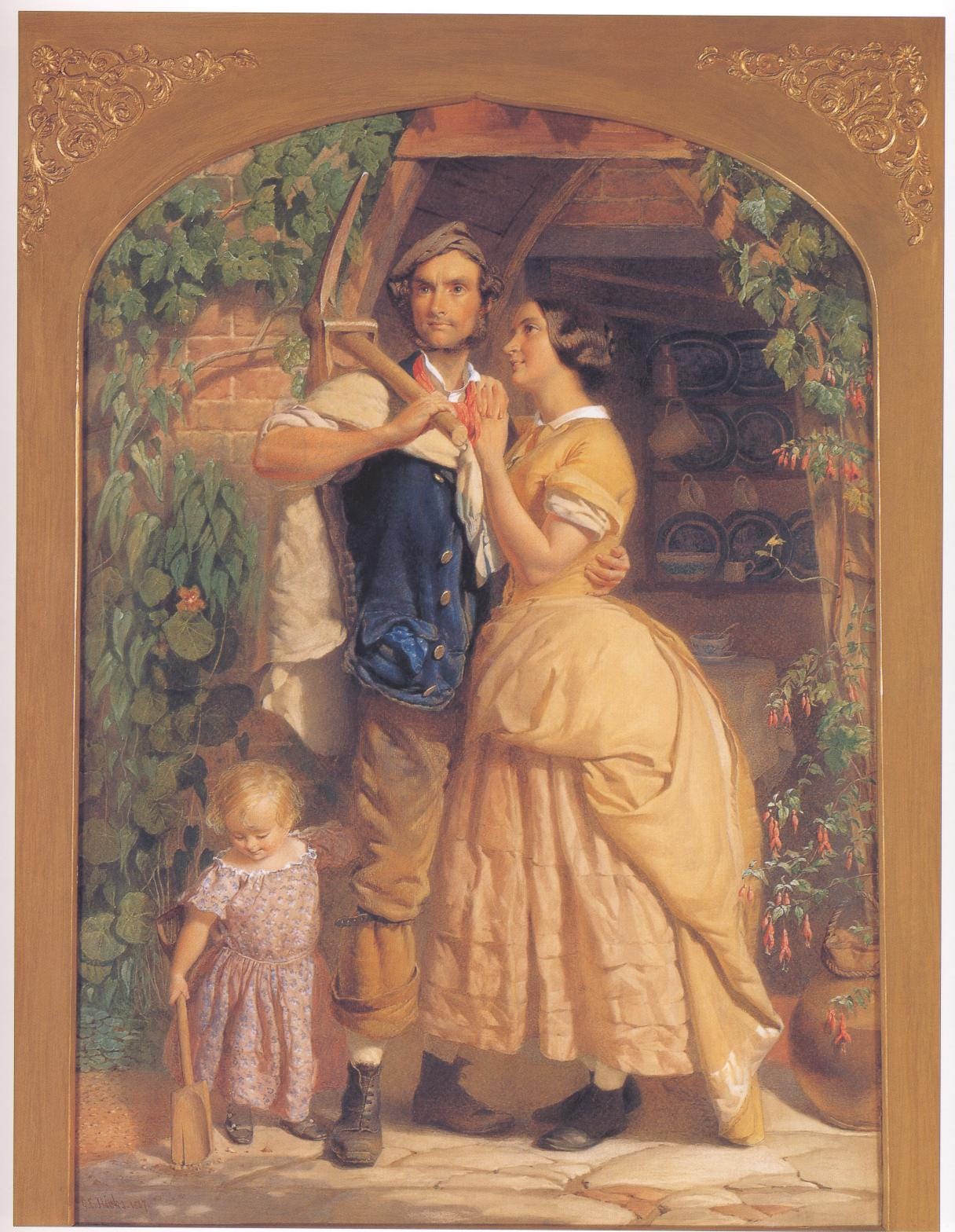
THE PLACEMENT
The separation did not begin as a modern invention.
It was an old division that was reactivated under new pressure.
In Politics1, Aristotle formalized the polis, the realm of deliberation, law, and citizenship, and the oikos, the household, where life was sustained but not governed. Women, children, and enslaved people were placed in the oikos because their labor was deemed necessary, continuous, and vital, but excluded from deliberation, wages, and civic authority.2
The boundary between household and political life persisted because it was useful. Across centuries, systems returned to this same division whenever essential labor threatened to interrupt governance. With the Industrial Revolution, this division came under new pressures and expanded.
When factories took off, town life changed faster than governance could adapt. Households were no longer the center of production. Tasks that had once anchored survival to the home were now itemized and streamlined.3
The system had relied on the household to bind together survival, reproduction, and obedience, but wages loosened its grip. Autonomy appeared where continuity had once been enforced, and escape became possible. Instead of the system responding with redistribution, the old solution returned, sharpened and moralized.
As industrial labor pulled women into factories and towns, the separation between public and private life intensified. The doctrine of separate spheres hardened into an organizing principle, recasting men as breadwinners whose place was the public world of wages, politics, and authority, and women as dependents whose proper domain was the home, regardless of whether they worked outside it.4
The ideology framed the division as natural, rooted in supposedly inherent differences rather than economic disruption. Care, reproduction, and domestic labor were pulled back into the household and refined as moral duty.
Independence was reframed as risk.
Participation in public life was recoded as deviation.
Stability was tied to submission because women no longer had to stay home.
The private sphere hardened because women’s growing visibility threatened the boundary. What wages loosened, doctrine was tasked with restoring. The household became the stabilizing site where continuity could be enforced quietly, even as the public economy absorbed women’s labor without absorbing its costs.
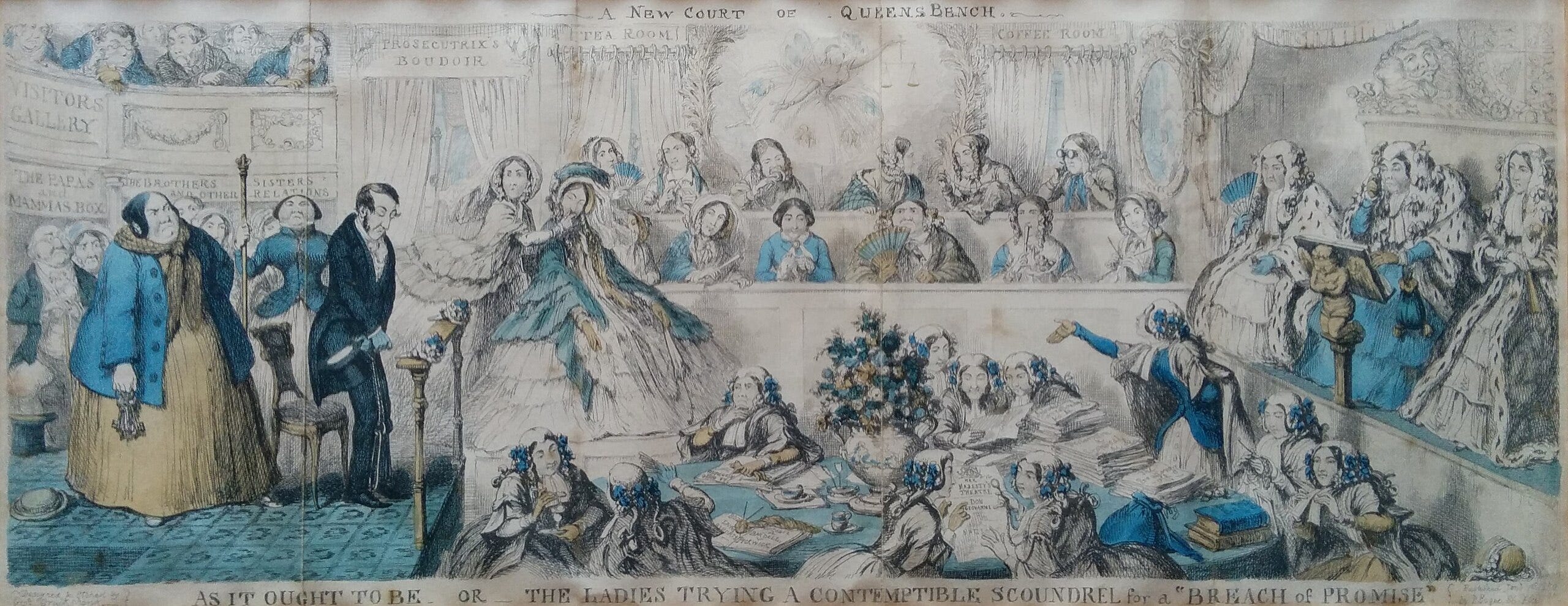
THE TRAINING
Once placement stabilized, it had to be reproduced.
Structure alone could not hold the division. It required instruction. Not enforcement through law, but discipline through expectation. What had been assigned economically needed to be learned socially.
The burden had to feel earned.
The absorption had to feel virtuous.
Domesticity had to become a moral system.
Unpaid care work was not described as labor. It was reframed as character. Patience. Nurturance. Self-regulation. The capacity to carry strain without complaint became evidence of worth. Dependence was recoded as devotion. Constraint softened into goodness.
The book Inequality states that systems of stratification persist most effectively when unequal labor is normalized rather than contested. When work is unpaid and moralized, it exits negotiation. Those who perform it are positioned outside decision-making, even as their labor remains essential to social stability.5
Those who carried the most without disruption were praised as natural, reliable, or respectable. Those who resisted were corrected and labeled selfish, unstable, or unfeminine. Surveillance did not require institutions, as social approval and disapproval were sufficient to get the work done.
Overload looked like inadequacy, exhaustion a personal weakness, and structural withdrawal never registered as a cause. The system’s refusal to provide support disappeared behind narratives of resilience and responsibility. Inequality reproduced itself through expectation, repetition, and praise.
The cult of domesticity did not merely justify unequal arrangements. It trained people to internalize them. It aligned survival with virtue and portrayed refusal as a moral failure rather than a rational response.
Once that alignment held, enforcement was no longer necessary.
The burden carried itself forward.
THE AESTHETIC
Once the discipline was learned, it no longer needed to be explained.
Instruction gave way to presentation, and what had been trained as obligation was recast as ideal.
The figure that emerged was neither productive in the public sense nor visible as laboring at all. She was calm, ordered, and balanced. The work she performed left no trace. Strain disappeared into composure. Endurance read as grace.
Aestheticization replaced command with aspiration. It didn’t tell people what to do. It showed them what to admire and what to live up to rather than something assigned.
Labor dissolves into the atmosphere. Care was measured by tone. Emotional regulation became evidence of competence. Silence became refinement. Absorption became strength.
Refusal no longer looked political, because it became personal. Fatigue was a failure of character. Anger excessive. Needs unseemly.
The image didn’t need to be universal to function. It circulated selectively and was reinforced socially. Its power was in its familiarity, not argument.
By the time critique arrived, the role no longer sounded like instruction.
It sounded like common sense.
THE INTERNALIZATION
Once the role is admired, it no longer needs to be reinforced.
The correction moved inward, where expectation became instinct. Adjustment happened before conflict formed. The system no longer needed to intervene because the subject had already done the work.
Nothing was explicitly forbidden.
Everything was moderated.
Speech was softened before it was spoken. Anger was redirected before it sharpened. Desire was narrowed until it fit the space already assigned. The work continued uninterrupted because it no longer registered as work.
There was no authority to resist because authority was no longer visible. Responsibility felt personal because it felt chosen. What had once been demanded was now anticipated.
Tone replaced rule.
Restraint replaced prohibition.
It all appeared natural.
Costs were absorbed without being named. Labor was carried without being counted. What was structural read as disposition. What was assigned read as character.
This is how inequality sustains itself without command. Once internalized, the structure no longer requires language, praise, or reminder. It does not need to be defended. It simply operates.
By the time inequality is questioned, it no longer appears to be control.
It looks like who someone is.
THE BREAK
Internalization works until it doesn’t.
The system depends on elasticity, on the ability to absorb strain without rupture, and on care that expands to meet demand without registering as cost. For a time, this holds, then pressure accumulates faster than it can be carried.
The signs first appear as fatigue, burnout, and resentment without language. The work continues, but its excess leaks out as illness, withdrawal, or collapse. What was meant to be infinite reveals its limits. The structure does not see itself because it has trained the subject to absorb responsibility inward.
When care fails, there is no mechanism to respond collectively, because its labor was never counted nor the cost acknowledged. There is no metric for repair because repair was never recognized as work.
So, the system escalates pressure instead.
More resilience.
More balance.
More optimization.
The role is not questioned. Instead, it intensifies as support is withdrawn. The private sphere is asked to carry more when markets cut back, when states retreat, when institutions hollow out. The difference is routed quietly and automatically inward.
The circuit closes again, but something has changed. The load is heavier. The margin is thinner. The contradiction is more visible. The promise that absorption will be rewarded no longer holds, yet the expectation remains.
The system reaches its limit, and what follows is not resolution, but repetition, sharper each time.
THE CLOSING
Some systems don’t rule by force.
They persist by placement.
They decide where responsibility will land, then step back. What follows is carried quietly. Care. Risk. Continuity. Repair. The work remains essential, but disappears from the record.
It did not begin as a belief. It started as a solution. A way to offload necessary labor, moralize the transfer, internalize compliance, and erase the paper trail. When it breaks under pressure, it does not vanish. It adapts. It resurfaces wherever support is withdrawn, and someone else is expected to carry the difference.
The danger is not that these roles return; rather, it is that they persist without a name.
Once the work is naturalized, it cannot be refused without consequence. Once responsibility is individualized, collapse appears as character. Once absorption is aestheticized, resistance occurs as a failure of the self rather than a failure of the structure.
This is how systems learn to disappear.
The hymn comes later.
So does the name.
What matters is recognition.
Without recognition, the pattern continues, refined and reused, waiting for the next place where care is needed, and accountability has been removed.
The work does not end.
It circulates.
Quietly.
https://blogs.lse.ac.uk/lseupr/2022/01/28/aristotles-account-of-the-place-of-women-within-the-polis/
https://philarchive.org/archive/SCHAAW-5
https://www.uml.edu/tsongas/barilla-taylor/women-industrial-revolution.aspx
https://amazingwomeninhistory.com/doctrine-of-separate-spheres/
Keister, L., & Southgate, D. (2022). Inequality (2nd ed.). Cambridge University Press. Retrieved from https://www.perlego.com/book/4230236/inequality-a-contemporary-approach-to-race-class-and-gender-pdf (Original work published 2022)